Drinking Water Filling Machine Customer Case Studies: From Global Brands to Emerging Markets
Understanding how equipment performs in real-world production is a critical basis for purchasing decisions. This article compiles multiple case studies of drinking water filling machines in actual projects, covering different scales, markets, and technical requirements. These real cases demonstrate how our filling equipment solves production challenges, improves efficiency, and ensures product quality across various scenarios.
Table of Contents
Aseptic Filling for Infant Water — Chemical-Free Sterilization
Major Beverage Enterprise — 17 Complete Lines in 3 Years with Process Upgrade
Middle East — The Region's Fastest Bottled Water Line
India — Ultra-Lightweight PET Bottle Production Challenge
Iran — High-Speed Carbonated Beverage Filling Line
Africa — 6,000 BPH Mineral Water Filler Delivery
Blow-Fill-Cap Intelligent Integrated Machine — Technological Achievement
Summary: Key Takeaways from These Case Studies
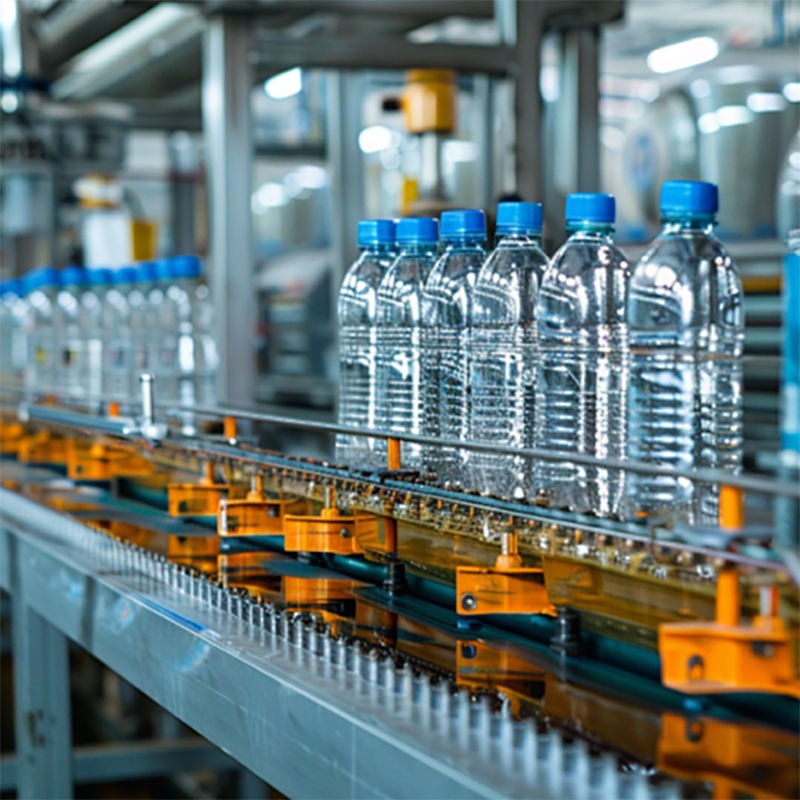
1. Aseptic Filling for Infant Water: Chemical-Free Sterilization
A well-known domestic drinking water company, one of China's largest bottled water producers and market leader since 2012, launched natural mineral water specifically for infants in 2015, marketed under the concept of "the safest water in the world."
To achieve this goal, the customer selected our PET bottle aseptic filling solution. The production line is installed at the natural water source, with core advantages including:
Chemical-Free Sterilization: Bottles and caps are sterilized through physical methods before filling, without using any chemical agents throughout the entire process
Aseptic Filling Assurance: A rigorous microbial validation system ensures sterile safety for special bottle types
Carbon Reduction Through Ambient Distribution: Aseptic packaging can be stored and transported at room temperature, significantly reducing greenhouse gas emissions compared to cold chain distribution
Over the past decade, we have provided more than 20 PET bottle aseptic filling systems to this customer. This long-term partnership validates the application value of aseptic filling technology in the drinking water market and demonstrates that deep technical collaboration between equipment suppliers and customers is key to ensuring premium product quality.
2. Major Beverage Enterprise: 17 Complete Lines in 3 Years with Process Upgrade
A well-known Chinese food and beverage company, whose boiled water product is widely popular in the Chinese market, recently ordered 3 complete PET filling lines from us, installed at different factories.
| Line Configuration | Capacity | Installation Location |
|---|---|---|
| Hygienic filling lines × 2 | 72,000 bottles/hour | South China Plant, Central China Plant |
| PET line × 1 | 90,000 bottles/hour | Southwest China Plant |
The two 72,000 bottles/hour hygienic filling lines feature a compact clean room design that reduces hydrogen peroxide and water consumption compared to traditional clean rooms, while increasing speed from the previous 63,000 to 72,000 bottles/hour.
A notable technological transition: the customer had previously used 85°C hot filling for its products. After successfully trialing our room temperature filling technology, the company achieved a switch to ambient temperature filling, significantly reducing energy consumption.
The customer's cumulative purchase of 17 complete lines in just three years reflects how large beverage companies prioritize stability, reliability, and energy efficiency in equipment selection.
3. Middle East: The Region's Fastest Bottled Water Line
A Middle Eastern bottled water company, wholly owned by the local water and electricity authority and the drinking water partner of a major regional airline, commissioned the fastest bottled water production line in Asia, Oceania, and Africa in 2021.
This line uses our high-efficiency combi technology, with a maximum capacity of 86,000 bottles/hour. Our digital efficiency improvement platform was first tested on the customer's existing production line. After validating its effectiveness, the customer gained full confidence in our technical capabilities, ultimately leading to this partnership.
This case demonstrates that in high-growth markets, ultra-high-speed lines are not just about capacity assurance—they are a strategic tool for building competitive advantage.
4. India: Ultra-Lightweight PET Bottle Production Challenge
A well-known mineral water brand in northern India, and the bottled water supplier for the country's largest airline, initially lacked confidence in Chinese-made equipment. However, after learning that we had established a subsidiary in India providing localized services, they decided to collaborate.
The core challenge of this project was producing ultra-lightweight PET bottles:
200ml bottle: Preform weight only 6 grams
500ml bottle: Preform weight only 9.5 grams
Ultra-lightweight bottles place extremely high demands on the stability of blow molding, filling, and conveying at every stage. We provided the customer with a complete line solution with 32,000 BPH capacity, covering the entire process from blow molding, filling, and capping to packaging, and delivered a three-day systematic training program.
The successful commissioning of this project demonstrates that as Chinese filling equipment technology advances, Chinese manufacturing now has the capability to compete with global suppliers in emerging overseas markets.
5. Iran: High-Speed Carbonated Beverage Filling Line
A leading beverage company in the Iranian market, producing juices and carbonated beverages with a large consumer base, selected our carbonated beverage filling line after rigorous evaluation of multiple international suppliers.
Key technical features of this project include:
| Module | Technical Features |
|---|---|
| Rinsing Module | 304/316 stainless steel rinsing heads with special nozzle design for efficient cleaning and water conservation; clamps with plastic pads to protect PET bottles |
| Filling Module | Filling heads support fine adjustment for consistent fill levels; all liquid contact components are polished stainless steel with no dead corners |
| Capping Module | Electromagnetic capping design with standard no-bottle-no-cap function; capping defect rate ≤0.2% |
We have delivered over 1,000 beverage filling lines to more than 90 countries worldwide, with customers including numerous internationally renowned beverage brands. This case illustrates that in carbonated beverage filling, high-precision pressure control and extremely low capping defect rates are core selection indicators.
6. Africa: 6,000 BPH Mineral Water Filler Delivery
At the end of 2025, we welcomed customers from Africa for on-site inspection and acceptance of two 6,000 BPH fully automatic mineral water filling machines.
Our manufacturing facility is located in Zhangjiagang, with a 15,000m² factory area including 12,000m² of standardized workshops. Our technical team comprises over 20 R&D engineers and more than 60 manufacturing specialists. Our services extend beyond equipment manufacturing to include workshop planning, equipment layout, utility engineering design, and bottle and label design consultation—positioning us as a full-process partner.
The 6,000 BPH filling machines delivered in this project feature:
Integrated rinsing, filling, and capping in a single fully automatic unit
Brand-name PLC control system
Support for quick adjustment across multiple bottle sizes from 250ml to 2000ml
This African customer case shows that for overseas customers with moderate capacity requirements, complete line service capabilities and stable equipment performance are key factors in driving purchases.
7. Blow-Fill-Cap Intelligent Integrated Machine: Technological Achievement
Our "PET Bottle (Barrel) Drinking Water Blow-Fill-Cap Intelligent Integrated Machine" project passed the technological achievement appraisal of the China Food and Packaging Machinery Industry Association.
Key technological breakthroughs of this project:
Process Integration: Integrates blow molding, filling, and capping into a single unit, achieving world-leading levels in single-mold output, applicable bottle types, and energy savings
Intelligence: Equipped with blow-fill-cap intelligent management and service systems for data collection, transmission, processing, and optimization; capable of data interaction and sharing through industrial internet with MES systems and remote maintenance platforms
Customer Coverage: Has provided equipment to numerous well-known domestic and international brands, with exports to Canada, the United States, Southeast Asia, Central Asia, India, and other countries and regions
This appraisal result achieves replacement of imported products with domestic equivalents, marking that Chinese-made drinking water filling equipment has achieved international competitiveness in technology and intelligence.
8. Summary: Key Takeaways from These Case Studies
Based on the above customer cases, the following common patterns for equipment selection and cooperation can be summarized:
| Consideration Dimension | Case Insights |
|---|---|
| Technical Match | The infant water project chose chemical-free aseptic filling; the major beverage enterprise shifted from hot to room temperature filling—equipment solutions must align precisely with product positioning |
| Supplier Reputation | Large enterprises tend to maintain long-term relationships with the same supplier, provided equipment remains consistently reliable |
| Complete Line Capability | The India, Iran, and Africa cases all demonstrate that turnkey delivery capability is a major consideration for overseas customers |
| Localized Service | Establishing subsidiaries or service networks in target markets is key to gaining trust from overseas customers |
| Intelligence Level | The intelligent integrated machine received appraisal recognition; digital monitoring platforms help customers improve efficiency—digital capabilities are becoming a differentiating factor in equipment selection |
Conclusion
From infant water aseptic filling, ultra-high-speed hygienic lines, the Middle East's fastest water line, and ultra-lightweight bottle challenges, to stable deliveries in emerging markets—these cases demonstrate the wide application of our drinking water filling machines across different markets and product positioning.
Behind every successful case is in-depth technical communication between our team and the customer, precise solution design, and ongoing service support. If you are planning a bottled water production project, contact us—let us leverage our accumulated real-case experience to provide the most suitable filling solution for your project.