


How to Choose Carbonated Beverage Filling Equipment? These 5 Core Indicators Determine the Success or Failure of Your Production Line


When procuring carbonated beverage filling equipment, focusing solely on price and capacity often leads to hidden costs surfacing after production begins—inconsistent fill levels causing product returns, equipment breakdowns during changeovers, microbial risks from dead zones in cleaning... By evaluating these 5 core indicators during the selection phase, you can avoid these pitfalls.
Indicator 1: Filling Accuracy — Is ±5ml the Passing Line or the Ceiling?
Filling accuracy directly determines product consistency and raw material loss. The industry-accepted standard for filling accuracy is liquid level error ≤ ±5ml, with high-end equipment achieving liquid level control within ±1.5mm.
Selection Tips:
Request sampling data after 2 hours of continuous operation from the supplier, rather than single-test "ideal" results. During continuous operation, valve dripping, line pulsation, and temperature fluctuations can all eat into accuracy margins.
Pay special attention to the sealing structure and material of the filling valves. Valve seals are consumable parts—their replacement cycle and cost should be clarified before purchase.
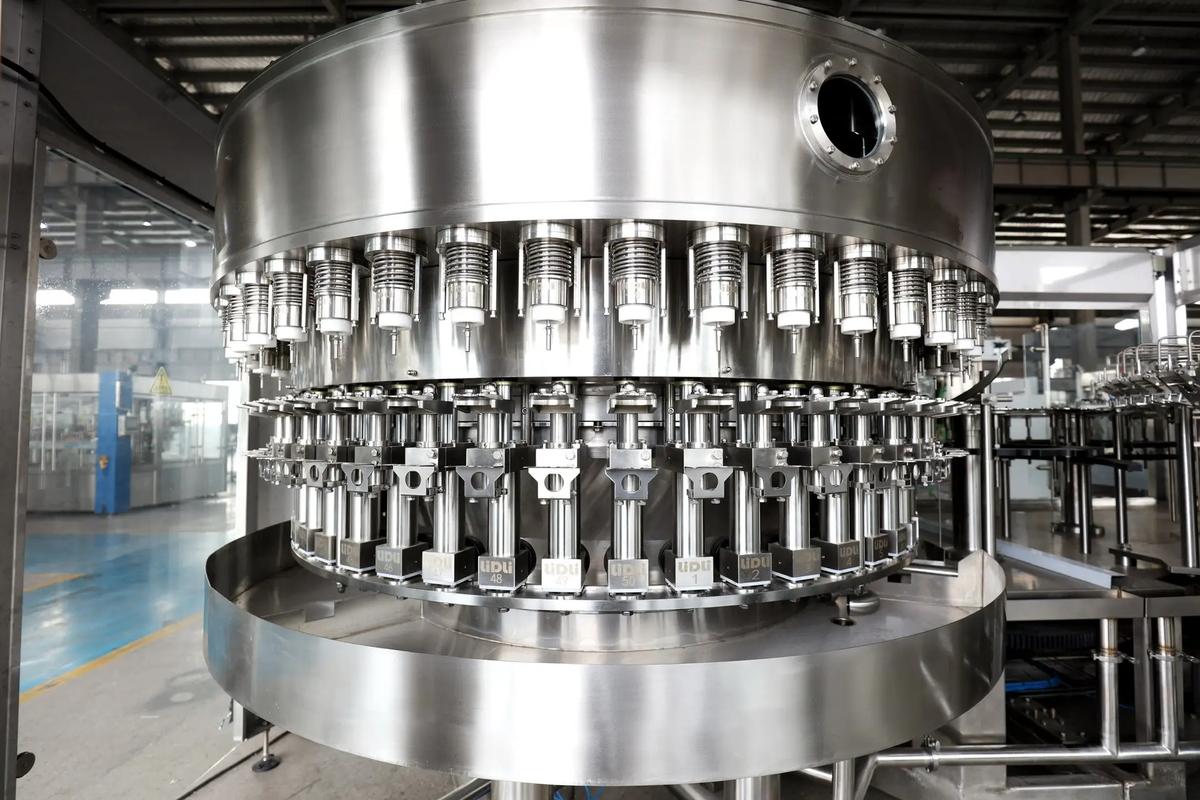
Indicator 2: Isobaric Filling Technology — The Core Guarantee of CO₂ Retention
The unique challenge of carbonated beverages (soda, sparkling water, beer, etc.) is: CO₂ must remain effectively dissolved during filling, otherwise the taste suffers significantly. This requires equipment that employs the isobaric filling principle—pressurizing the bottle with CO₂ before filling to balance pressure with the tank, preventing splashing and CO₂ escape.
Selection Tips:
Confirm the equipment is equipped with a precise pressure regulation system that monitors and adjusts pressure in real time.
The filling valve should feature a umbrella-shaped or tapered flow guide design to reduce splashing. Avoid "long-tube insertion" filling nozzles—they are practically "foam generators" in carbonated applications.
Check whether the equipment supports low-temperature filling—lower temperatures improve CO₂ solubility.
Indicator 3: Production Capacity — The Nameplate "2000 BPH" May Only Deliver 1200 on the Shop Floor
The theoretical capacity on equipment nameplates is often based on "ideal conditions"—using standard round bottles with zero changeover downtime. In real production, bottle tolerances, minor thread variations, and conveyor vibration all cause time losses.
Selection Tips:
Discount theoretical capacity by at least 30% as a reference for actual output.
Insist on a trial run using your own bottles and caps, running continuously for at least half a day, and measure actual output on site. Skipping this step may lead to endless disputes over "capacity non-compliance" later.
Select capacity based on 3-5 year sales forecasts, leaving moderate room for growth but avoiding severe overcapacity—excess capacity means idle capital and wasted depreciation.
Indicator 4: Sanitary Design and CIP Cleaning — The Biggest Hidden Costs Are the Ones You Don't See
Carbonated beverages (especially sugar-containing formulas) can quickly become breeding grounds for microorganisms if residues remain in filling valves, pipe dead zones, or hidden corners. The equipment must have robust CIP (Clean-in-Place) and SIP (Sterilize-in-Place) capabilities to complete internal cleaning without disassembly.
Selection Tips:
All liquid-contact parts must be food-grade stainless steel (304/316L) with food-grade silicone or PTFE seals. Pay particular attention to concealed components like check valve springs inside filling pumps—there have been cases where substandard spring materials rusted in saline environments, causing contamination incidents.
The internal design should be smooth, seamless, and free of dead zones to facilitate cleaning and disinfection.
Indicator 5: Equipment Compatibility and Changeover Efficiency
If your product line covers multiple bottle types (PET, glass, cans) or different capacities, the equipment's compatibility and changeover speed directly impact line utilization.
Selection Tips:
Prioritize equipment using neck handling transfer technology—when bottle formats change, fewer parts need replacement, making changeovers faster.
Clarify changeover time: from 15 minutes for quick changeovers. If the bottle formats differ dramatically (e.g., switching from 250ml to 1.5L), changeover costs and time will increase substantially—assess this based on your actual switching frequency.
Appendix: Industry Standards and Mainstream Selection References
The technical specifications for complete carbonated beverage filling lines are already covered by the national standard General Technical Specifications for Beer and Carbonated Beverage Can Filling Production Lines, which addresses key parameters including production capacity, efficiency, filling accuracy, sealing quality, finished product qualification rate, and packaging material loss rate. It is recommended to reference this standard as the acceptance criterion in your procurement contract.
Mainstream Equipment Configurations:
3-in-1 Filling Machine (washing + filling + capping integrated) is currently the market mainstream, suitable for PET bottles, glass bottles, and other container types.
Filling heads range from 12 to 60, corresponding to capacities from 1,500 BPH to 24,000 BPH.
Related Blogs
-
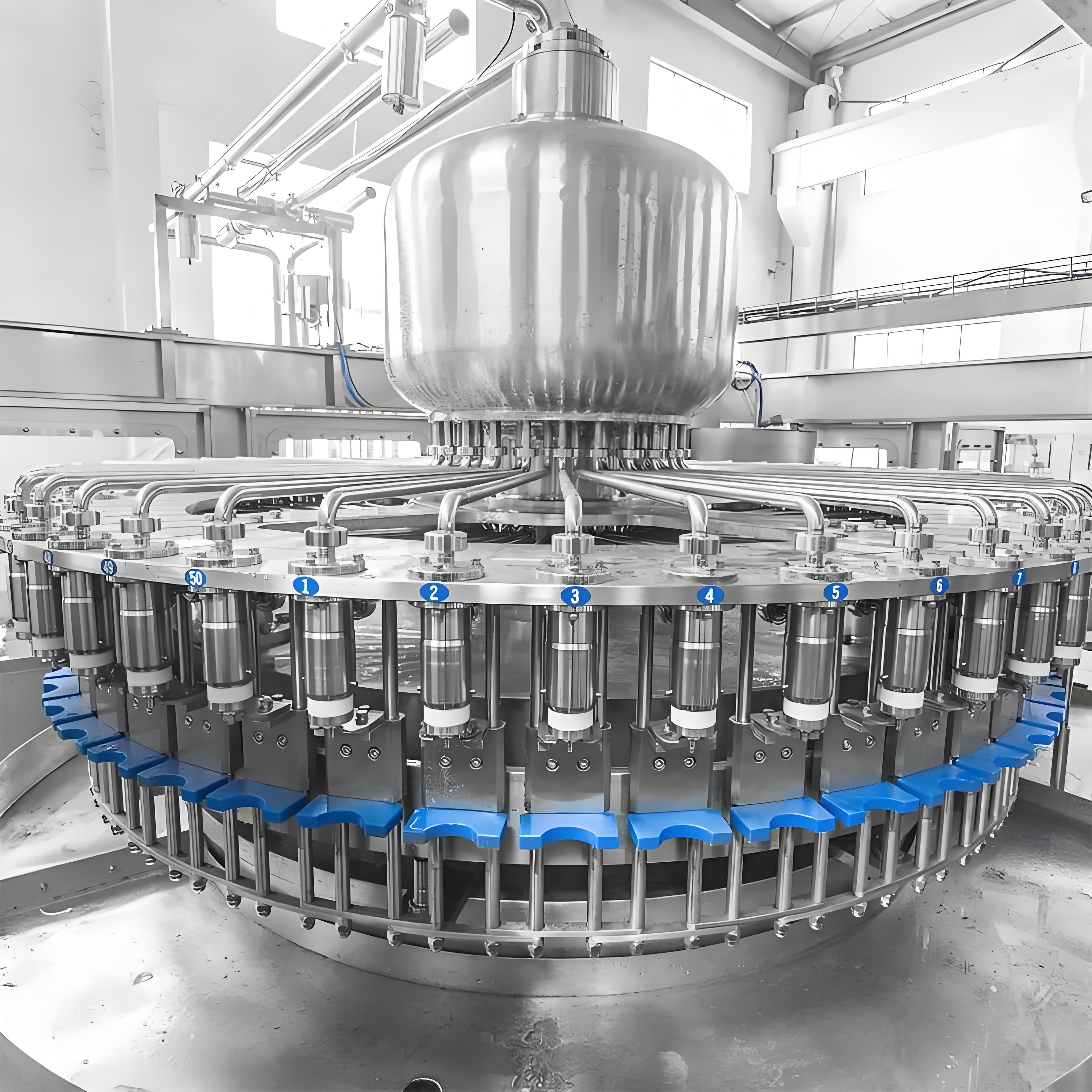 The global liquid filling machine market is booming, driven by the rising demand for efficient and hygienic bottling solutions across the beverage, food, and pharmaceutical industries. As a leading water filling machine manufacturer, Zhangjiagang Sanofi Machinery Co., Ltd. has been providing state-o
 -
 The bottled water market is expected to continue growing over the next few years, driven by changing consumer preferences, increasing health consciousness, and an expanding demand for convenient, portable hydration options. Below is a breakdown of the key factors influencing the bottled water market
